
CASE

CASE

Main Menu

  • Learning
    • Conferences & Training
      • In-Person Events
      • Online Offerings
    • Online Learning
      • CASE Learning Center
      • Onboard Into Advancement
    • Scholarships
    • Conference Policies
    • Present at a Conference
    • CASE Academy

    Online Learning

    Illustration of a mouse connected to a book on a yellow background

    Browse CASE's online offerings to find the best virtual programming and training for you and your team.

  • Resources
    • Library
      • Advancement Resource Catalog
      • Subject Guides
      • CASE Files
      • News Roundups
      • Sample Collections
      • Sample Submission Guidelines
    • Currents Magazine
    • Bookstore
    • Educational Partners Directory
    • Newsroom
    • Public Policy
    • Alumni for Higher Ed
    • All Resources

    Advancement Resource Catalog

    ARC

    Visit the CASE Library's database and search through more than 15,000 articles, books, and white papers. Start your search.

  • Insights
    • Getting Started
    • Today’s Opportunities
    • Building Strategy
    • Surveys
    • CASE Global Reporting Standards
    • Research

    CASE Insights on Generative AI in Advancement

    CASE Insights on Generative AI in Advancement

    In this new interactive report, CASE Insights offers a comprehensive approach for adopting generative AI, based on findings from a year-long research study with advancement practitioners.
     

  • Awards
    • Circle of Excellence
    • Global Individual Achievement Awards
    • Independent School Awards
    • Individual Achievement Awards
      • Distinguished Service Awards
      • CASE Leadership Award
      • Previous Winners
    • CASE District Awards
    • CASE Commonfund College and University Foundation Award
    • Award Recipients

    Circle of Excellence Awards

    COE

    CASE’s annual Circle of Excellence Awards showcase outstanding work in advancement. Meet our exceptional award winners.

  • Connect
    • Regions
      • Africa
      • Asia-Pacific
      • Europe
      • Latin America
      • US/Canada
      • Regional Councils
    • Districts
    • Communities
    • Schools
    • Community Colleges
    • College and University Foundations
    • U.S. Advocacy Action Center
    • Alumni for Higher Ed
    • Volunteer
    • Educational Partners
      • Engage with CASE
      • Marketing Opportunities Available with CASE
      • Industry Advisory Council
      • Educational Partners Directory
      • CASE Standards Champions
      • CASE Media Kit
    • CASE Multi-Cultural Network

    Educational Partners

    Educational Partners

    Meet CASE's Educational Partners - industry thought leaders working with CASE to strengthen schools, colleges, and universities.

  • Talent
    • Career Central
    • CASE Advancement Internship US-Canada
      • Become a Host Institution
      • Intern Spotlight

    Career Central

    Career Central

    Visit CASE's Career Central to build your team or look for new career opportunities. 

  • About
    • Championing Advancement: CASE Strategic Plan
    • Celebrating 50 Years
    • What CASE Stands For
    • The Evolution of CASE
      • Board Leadership
      • Volunteer Leadership
      • President's Page
      • 2026-2027 Election
    • Offices & Staff
      • Washington D.C.
      • London
      • Mexico City
      • Singapore
      • Senior Staff Listing
    • Membership
    • Giving to CASE
      • Giving Opportunities
      • Impact of Giving
      • Legacy Giving
    • Online Newsroom
      • CASE in the News
      • CASE Experts
      • CASE Media Kit
    • Careers at CASE

    Giving to CASE

    Giving to CASE

    At CASE, we inspire, challenge, and equip nearly 100,000 advancement professionals across the globe to champion the success of educational institutions and the millions who benefit from them. With philanthropic support we can do more.

  • Membership
    • Create/Manage My Account
    • Become an Institutional Member
    • CASE Membership Primary and Secondary Coordinators
    • Explore Membership Benefits
    • Membership Directory
    • Membership Tutorial Videos

    Member Benefits

    Member Benefits

    Strengthen your advancement operation, including the latest research and trends in advancement, career and professional development programs, and publications. 

    See all membership benefits and contact us today! 

  • Give to CASE
  • Log in
  • Alerts
  • Search
  • Shopping Cart
Strategic Plan

College and University Foundations

College and University Foundation Events:


Save the Date:

The 2027 Conference for College & University Foundations
April 19-21, Philadelphia, PA.


Webinars:

Upcoming Webinars:

  • Summer 2026 Small Shop Roundtable (June 24, 2026, 2 to 3 p.m. ET)


Watch Anytime:

  • College & University Foundation Survey Key Findings (Spring 2026)
  • Two Part Series: The Future of Advancement Services: AI, Insights, and Impact (Spring 2026)
    • Part One: From Legacy to Leading Edge: The Future of Advancement Operations
    • Part Two: From Insight to Impact: How Relationship Insights and Pipeline Development Are Reshaping Advancement
  • Building a Strong Talent Pipeline: Strategies for Growth, Retention, and Succession in Higher Education Foundations (Spring 2026)
  • Two Part Series: From Compliance to Connection: Reimagining Privacy at OSUF (Fall 2025)
    • Part One: From Compliance to Trust: How OSU Foundation Built Buy-In for a Privacy-First Future
    • Part Two: Putting People First: Personalization and Privacy at OSUF
  • Successfully Onboarding Your Staff So They Stay--and Thrive (Spring 2025)
  • Real Estate Investments for College & University Foundations: Opportunities, Risks, and Strategic Insights (Spring 2025)
  • Generative AI in Higher Education Foundations: A Framework for Responsible Innovation (Spring 2025)


2026 Commonfund Award

Zink, DeSanto Receive the 2026 CASE Commonfund College and University Foundation Award

2026 winners DeAnna Zink and Ginny DeSanto

2026 Commonfund Award winners DeAnna Carlson Zink and Ginny DeSanto receiving their awards

The Council for Advancement and Support of Education is pleased to announce that DeAnna Carlson Zink and Ginny DeSanto are recipients of the 2026 CASE Commonfund College and University Foundation Award.

The award recognizes individuals who have made extraordinary contributions to the advancement, quality, and effectiveness of their foundations. The Commonfund Institute, which underwrites the award, is the research arm of Commonfund, which provides investment management services to nonprofit organizations and other institutions.

Since 2014, DeAnna Carlson Zink has been the Chief Executive Officer of the University of North Dakota Alumni Association and Foundation. In 2025, she led the UND Forever campaign to exceed its $500 million goal 20 months early and championed the increase to a $625 million target. She was also instrumental in the North Dakota Spirit Campaign which concluded in 2013 after raising $324 million. Zink holds a bachelor's degree in management and communications from the University of North Dakota. She serves on the boards of Center for Innovation Foundation, Energy and Environmental Research Center Foundation, Association of Governing Boards of Universities and Colleges Council of Foundation Leaders, North Dakota Xcel Energy Advisory Board, and Sanford Health Plan. In 2023, she received Prairie Business Magazine’s top 25 Women in Business award. For CASE, she sits on the College and University Foundation Leadership Committee and has served on the planning committee for the Conference for College and University Foundations since 2021, including chairing the conference in 2024
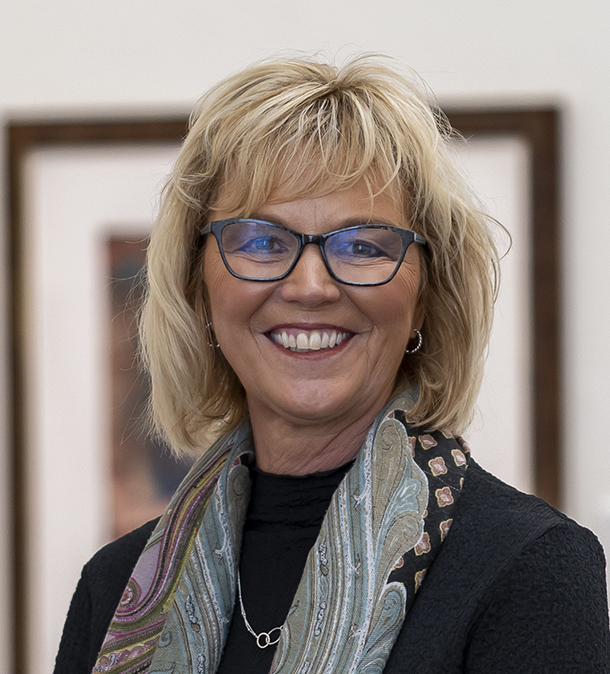
DeAnna Carlson Zink

Ginny DeSanto is Chief Financial Officer and Treasurer of Arizona State University’s ASU Enterprise Partners. She has led the nonprofit through a period of significant growth, from a base of total assets at $506 million to current total assets of $2 billion, with annual revenue growing from $101 million to $442 million. She also led ASU’s foundation through several restructurings, including new financial reporting and processing that occurred as a result.  She holds a bachelor's degree in accounting from Arizona State University. For CASE, she is a CASE Laureate, volunteered for the Colleges and University Foundation Leadership Committee from 2012 to 2021, serving as its chair from 2018 to 2020, and chaired its 2023 Conference for Chief Business Officers & Chief Development Officers.

Ginny DeSanto

“DeAnna Carlson Zink and Ginny DeSanto exemplify the very best of foundation leadership and CASE volunteerism,” says Sue Cunningham, President and CEO of CASE. 

“Through their commitment to their work, they have strengthened their institutions and expanded opportunities for countless students. Beyond their extraordinary professional achievements, they have been steadfast champions of the advancement profession, generously giving their time and expertise to CASE and the broader education community. We are honoured to recognise their leadership and impact.”

Zink and DeSanto will receive their awards on April 9, 2026, during the CASE Conference for College and University Foundations in Seattle.


Meet the CASE National Committee for College and University Foundations

The CASE Committee on College and University Foundations provides leadership and guidance on horizon issues to college and university foundations (CUFs) and the institutions they serve. 

Specifically, the committee:
• Provides learning opportunities and professional development for foundation professionals;
• Engages fellow foundation colleagues on issues affecting CUFs;
• Discovers and develops research that provides solid fact-based information on CUFs and their work

View all CASE National Committee for College and University Foundations members here.

College and University Foundations Leadership Team


Building Private Support for Students, Research, and Learning

College and university foundations are separate 501(c)3 charitable organizations that exist solely to support students, research, and learning at a college, university, university system, or college unit.

#casecuf

Resources

Management and Governance Checklist for College and University FoundationsFY25 College & University Foundation Survey Key FindingsConference for College and University Foundations 2025College and University Foundation Online Community

College and University Foundations support their institutions by:

Past winners of the CASE Commonfund College and University Foundation Awards.

2024 Commonfund Winner Christy Devocelle, 2026 winner DeAnna Carlson Zink, Commonfund Securities President Anita Hariton, 2026 Winner Ginny DeSanto, and 2022 Winner Jeff Mills at the CASE Conference for College and University Foundations in Seattle, April 9, 2026.

  • Generating philanthropic support for students, faculty, research, academic, and vocational programs
  • Advising and guiding donors, connecting their passion with institutional priorities
  • Engaging alumni and volunteers in the life of the college or university
  • Building and creating partnerships with business to drive workforce development
  • Partnering with the institution to address major challenges
  • Protecting sensitive donor financial information and donor anonymity
  • Raising and managing private support for benefit of the institution, communities it serves, and the state
  • Advocating for the role and importance of philanthropy at the institution and beyond
  • Supporting program innovation and the discovery of new ideas

By the Numbers

500
Affiliated with public four-year colleges and universities
900
Affiliated with community colleges
1,400
College and University Foundations in the United States

Frequently Asked Questions

For a long time. The first college and university foundation – KU Endowment – was established in 1891 to support the University of Kansas. Since that time, thousands of public colleges and universities have established college and university foundations. Foundations affiliated with 4-year public colleges and universities were typically established in the first half of the twentieth century while community colleges began to establish foundations in the 1960s-70s.

While all college and university foundations are separate legal entities from their institutions, their level of independence varies. Some foundations are completely independent, employing and paying for their own staff, office space, computer systems, etc. Most foundations, however, share staff, office space, and systems with their institutions. Many foundation chief executives also serve as vice presidents or vice chancellors of advancement or development at their college.

Regardless of their degree of independence, all college and university foundations exist to support their institution.

Some donors feel more secure in making major gifts to a foundation governed by individuals with specialized legal, business, and financial management expertise. Unlike public college and university regents or trustees, who are typically politically appointed or elected and have primary responsibility for institutional governance, foundation trustees are recruited for their ability to raise and manage private support for the benefit of those served by the institution. They also have a fiduciary responsibility to ensure that gifts are managed and spent in strict accordance with donors’ wishes.

In many instances, foundations can also protect the privacy of donors who wish to remain anonymous or do not want the details of their personal finances to become a matter of public record.

Like other charitable organizations, college and university foundations are governed by an independent volunteer board. In addition to serving as fiduciaries for the foundation, foundation board members support the college or university in a variety of ways. They typically contribute personally, serving as leaders and examples for other donors. Foundation board members also help staff with prospect identification, solicitation, and stewardship. And they may also serve as representatives and/or advocate on behalf of the foundation with the media and lawmakers.

Typically, the president/chancellor of the college or university and/or other senior institutional staff sit on the foundation board. In most cases, the CEO or executive director of the foundation also holds a senior, cabinet-level position within the educational institution, such as vice president/vice chancellor of advancement. These arrangements help maintain open communication between the foundation and the institution it serves.

As public charities, college and university foundations are accountable to their donors and to the students, faculty, staff, and trustees of the institution they support. They are also legally accountable to

the Internal Revenue Service and state agencies that oversee charitable organizations (typically attorneys general). Foundations must file an annual IRS Form 990 information return, which is a public document. Additionally, foundation annual reports, gift and endowment reports, investment performance summaries, audit summaries, and financial statements are routinely made available on foundation websites or are available upon request. Most foundations also honor requests for other information that does not compromise the privacy or financial information of their donors.

College and university foundations are established to support students, research, and learning. They are not a vehicle for shielding information from the public. CASE encourages foundations to be as open with information as possible, especially as it pertains to expenditures and uses of funds, while recognizing that donors often consider and request that their gift information remain confidential.

No. College and university foundations are public charities as defined by the Internal Revenue Code. As such, they receive funds from many different donors in the form of charitable contributions. In contrast, private foundations are distinct from public charities in the Internal Revenue Code. Most private foundations:

  • are established by a single donor (typically an individuals or corporation),
  • do not solicit funds from other donors, and
  • are governed by boards controlled by donors, family members, or representatives of donor corporations who make decisions about how to spend and invest foundation funds.

A small number of private colleges and universities have established separate foundations. These institutions typically establish foundations as a way of focusing attention on private fundraising and as a means of capitalizing on the talent and interest of prominent and successful alumni and other friends of the institution. Most private institutions, however, do not have separate college and university foundations.

In the early 1990s, CASE convened a group of about thirty college and university foundation executives, many of whom were members of the Society of Institutionally Related Foundations, or SIRF. SIRF, an independent organization based primarily in the New England states, was formed to encourage information sharing among college and university foundation chief executives. Following this convening, CASE established the National Center for Institutionally Related Foundations and the National Committee for Institutionally Related Foundations to demonstrate the association’s commitment to serving the unique needs of college and university foundations.

In 1993, SIRF and CASE partnered on a meeting in San Antonio for college and university foundation executives. The meeting was so successful that leaders of both organizations decided to make the convening an annual event. A few years later, the meeting was formally re-named the CASE Conference for Institutionally Related Foundations, an annual conference that continues to this day.

In 2020, CASE replaced the “institutionally related foundations” label with “college and university foundations.”

PURPOSE – exist to raise and/or manage private support for a single institution or system of institutions while honoring donor intent.

PUBLIC – are affiliated with public colleges and universities, including 4-year institutions and community colleges.

GOVERNANCE – college and university foundations are separate, legal entities with their own governing board.

CASE

CASE
  • CASE Communities
  • Member Login
  • Careers at CASE
  • Terms & Conditions
  • Privacy Statement
  • Staff Intranet
Connect with CASE
  • Facebook
  • Twitter
  • LinkedIn
  • Instagram

CASE Member Support
+1-202-328-CASE [2273]

CASE

CASE
Close

Search

Popular Searches
Books Advancement events Articles Fundraising Resources CASE Insights Resources Awards CASE Library CURRENTS Talent